What Narcissistic Family Scapegoating Looks Like
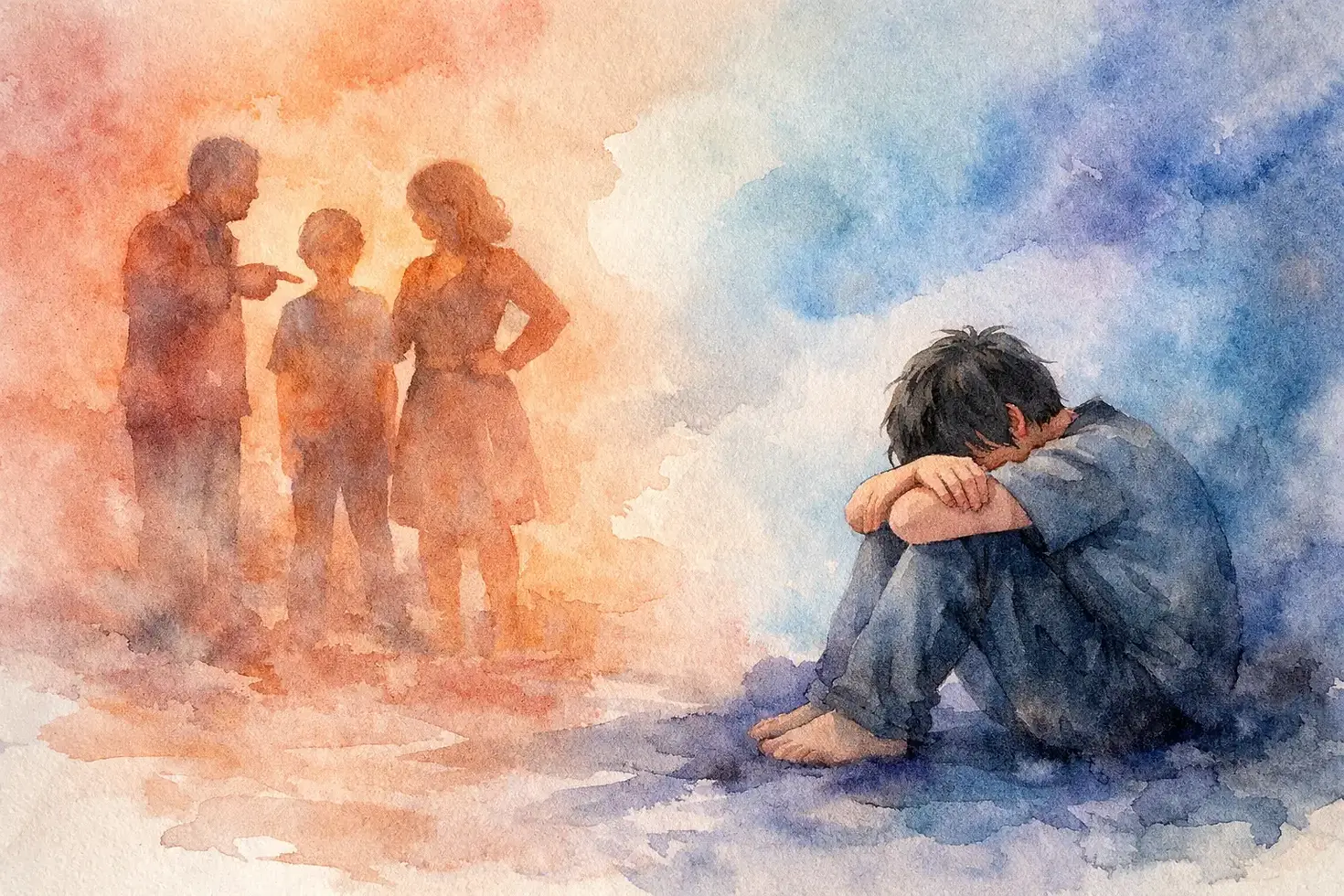
Being blamed for a family’s tension can feel like living under a spotlight you never asked for. In narcissistic family scapegoating, one person is repeatedly assigned responsibility for conflict, disappointment, or dysfunction that does not belong to them alone. Over time, they may begin to wonder whether they really are difficult, selfish, unstable, or impossible to love.
This pattern can be especially confusing because it often happens alongside moments of affection, practical support, or public displays of family closeness. From the outside, the family may appear loving or successful. Privately, one member may be criticized, excluded, disbelieved, or expected to absorb everyone else’s distress.
What narcissistic family scapegoating means
A scapegoat is the person a family system treats as the source of its problems. In a narcissistic or chronically antagonistic family dynamic, this role can protect a parent’s self-image or keep difficult truths out of view. Rather than acknowledging their own hurtful behavior, favoritism, addiction, anger, financial choices, or unmet needs, family members may direct blame toward one person.
The scapegoated person is not necessarily the quietest or most vulnerable family member. Sometimes they are the child who asks questions, notices contradictions, resists unfair rules, or has a different personality, identity, faith, partner, or life path. Their difference may become treated as proof that they are the problem.
This does not mean every painful family conflict is narcissistic family scapegoating. Families can have real disagreements, and any person can make mistakes. The concern is a repeated pattern in which accountability flows in only one direction: toward you. Your perspective is dismissed, while others are protected from examining their part.
Signs you may have been assigned the scapegoat role
The role is often less obvious than open name-calling. It may show up in small, repetitive interactions that make you feel tense before a call, holiday, group chat, or visit. You may be expected to apologize first, even when you were hurt. A sibling’s outburst might be explained away, while your reaction becomes evidence that you are “too sensitive.”
You may also notice that family stories are rewritten. A parent may deny something they said, insist you misunderstood, or describe you to relatives as cruel, ungrateful, or unstable. When you try to clarify what happened, the conversation shifts from their behavior to your tone, memory, or character. This can resemble gaslighting and create deep self-doubt.
Other common experiences include being left out of information or decisions, being compared unfavorably to a favored sibling, or being contacted mainly when someone needs emotional labor. You may be blamed for “breaking up the family” after setting a reasonable boundary. In some families, relatives are encouraged to take sides, a pattern sometimes called triangulation.
The emotional effect can be profound. Many people describe constant rumination: replaying conversations, drafting explanations, and searching for the exact words that might finally make their family understand. They may feel guilty for being angry, fearful of conflict, or disconnected from their own perceptions.
Why the pattern can be so hard to name
Children and dependent family members need connection. When belonging feels conditional, it can seem safer to believe, “I am the problem,” than to recognize that a caregiver is unable or unwilling to treat them fairly. That belief may continue into adulthood, even after the person has gained more independence.
The family may reinforce the role through intermittent kindness. A parent who criticizes you for months may suddenly become warm, generous, or vulnerable. Those moments can bring hope and make it difficult to hold onto the broader pattern. This push and pull can contribute to a trauma bond, especially when affection, approval, and emotional pain are tightly intertwined.
Culture, immigration, and religious community can add real complexity. In some families, loyalty to elders, privacy, sacrifice, or preserving the family’s reputation carries significant meaning. A person may fear being seen as disrespectful if they name harmful behavior. They may also worry about losing language, community, financial support, childcare, or connection to relatives abroad.
These pressures deserve respect. Setting a boundary does not require rejecting your culture, faith, or family history. It can mean finding a response that honors what matters to you while making room for your emotional safety. The right approach depends on your circumstances, including age, housing, finances, immigration concerns, and the risk of retaliation.
What healing can look like
Healing often begins with moving from a character question - “What is wrong with me?” - to a pattern question: “What keeps happening here?” Journaling specific interactions can be useful. Write down what was said, what occurred beforehand, how you responded, and whether the same rules apply to others. The goal is not to build a legal case against your family. It is to help your mind regain a grounded sense of reality.
It can also help to separate responsibility from blame. You are responsible for your choices, words, and repair when you cause harm. You are not responsible for managing another adult’s rage, protecting their image, or carrying the consequences of behavior they refuse to address.
Boundaries may be small and practical at first. You might end a conversation when yelling begins, decline to discuss a topic that is used against you, or take longer to respond to accusatory messages. A boundary is not a perfect sentence that makes another person agree. It is a decision about what you will do to protect your well-being when a pattern continues.
For some people, limited contact creates more stability. For others, especially those who are minors or financially dependent, reducing contact may not be possible or safe right now. In those cases, support can focus on internal boundaries, identifying trustworthy adults, making a safety plan, and building a life beyond the family narrative. There is no single “correct” level of contact.
Support for the emotional aftermath
Scapegoating can affect relationships long after you leave the family home. You may over-explain, expect rejection, feel responsible for everyone’s feelings, or become alarmed when someone is disappointed in you. These responses are understandable adaptations to an environment where acceptance felt uncertain.
Therapy can offer a private place to process grief, anger, loyalty, and confusion without being pressured to forgive, confront, or cut off anyone before you are ready. A relational-trauma-informed therapist can help you recognize gaslighting, understand trauma-bond patterns, practice boundaries, and reconnect with your own judgment. For people from immigrant, Slavic, or religious communities, it can be particularly meaningful to work with someone who understands that family conflict may carry cultural and spiritual weight.
At Newington Therapy, online counseling can support both immediate concerns, such as managing contact before a family event, and longer-term work around self-trust, attachment, and the impact of chronic criticism. You deserve care that takes your circumstances seriously rather than reducing a complicated family story to a simple label.
If you recognize yourself in the scapegoat role, you do not need to prove your pain to everyone in order for it to matter. Start by treating your own experience as worthy of attention. Clarity can grow quietly, one honest observation and one safer choice at a time.


Comments